B2B Content Strategy: How to Be Persuasive Without Being Salesy
June 3, 2026
POS Marketing: Why Solution-Focused Messaging Wins Over Feature-Led
August 12, 2026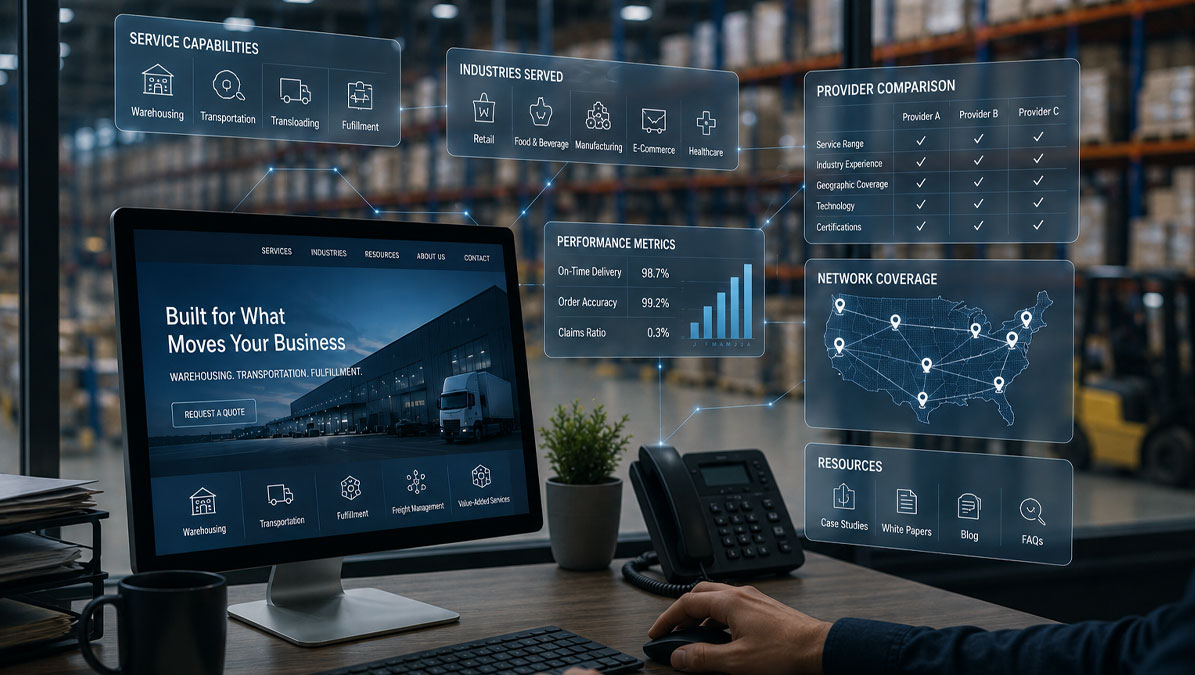
The 3PL Buying Process Has Changed
There was a time when most shippers found new providers through referrals, industry relationships, or word of mouth. Those channels still matter, but they're no longer the only way buyers evaluate potential partners. Before reaching out, many now spend time reviewing websites, comparing capabilities, searching for industry expertise, and looking for answers to specific operational questions. 3PL marketing has become an important part of that research process because it helps buyers find and evaluate providers before the first conversation ever takes place.
The path buyers take during the research phase has also changed. They may read an article, find an answer through AI search, or compare providers directly in search results before visiting a website. Each interaction gives buyers more information to evaluate their options before deciding who to contact.
What Shippers Look For First
Shippers are looking for information that helps them determine whether a provider can support their business. If they can't quickly understand what services are offered, which industries are supported, or whether a provider has experience with similar operations, they're likely to continue evaluating other companies. Effective 3PL marketing immediately provides the information buyers need to better understand their options.
Services That Match Their Requirements
One of the first things buyers evaluate is whether a provider offers the services their business requires. If that information isn't easy to find or lacks enough detail to answer basic questions, it's difficult to determine whether the provider is worth contacting. Service pages should explain capabilities clearly enough for buyers to understand what the provider offers. Buyers also want to understand the technology that supports those services, including WMS, ERP, EDI, and TMS integrations that provide real-time visibility into their supply chain.
- Service pages that explain every service offered and how each applies to different business requirements.
- Detailed explanations of capabilities, processes, and service limitations.
- Compliance certifications and industry accreditations relevant to each service.
Experience with Similar Businesses
Industry experience helps buyers understand whether a provider has worked with similar products, operations, or supply chain requirements. 3PL marketing should communicate industry knowledge, not just claim it.
- Specialized experience with regulated, complex, or industry-specific operations.
- Examples of how similar operational challenges were solved and the business results achieved.
- Case studies, customer success stories, and testimonials that support credibility.
Geographic Coverage That Supports Their Operations
Knowing where a provider operates helps buyers determine whether they can support their current operations and future expansion plans. Network coverage should clearly communicate where a provider operates and the geographic areas it supports.
- Service locations, warehouse networks, and distribution networks.
- Regional, multi-location, and nationwide capabilities.
- Operating footprint and the ability to support future growth.
How Your Website Influences Buyer Decisions
A website gives buyers a place to learn about a 3PL provider and their services. It's the foundation for 3PL marketing because it supports how prospects discover, research, and evaluate providers throughout the buying process. How clearly a website explains who they are, what they do, and how their services support different business requirements helps buyers narrow the list of 3PL companies they're considering.
Service Information Buyers Need
Service pages should explain the services offered, how they're delivered, and what they include. Buyers use that information to determine whether the capabilities align with their operational requirements. The more specific the information, the easier it is to understand how each service supports different business requirements.
- Scope, capabilities, processes, and expected outcomes for each service.
- Examples that show how each service is applied in different operational environments.
- Answer common questions buyers ask about each service.
Understanding Different Industries
Industry pages explain a provider’s experience supporting businesses with similar products, regulations, and operational requirements. They should address the operational priorities and supply chain considerations of each industry while demonstrating an understanding of how those businesses operate.
- Industries served, products handled, and specialized expertise.
- How services support the unique requirements of different industries.
- Industry-specific operational requirements, compliance considerations, and answers to common buyer questions.
Customer Proof and Results
Customer proof helps buyers validate the claims made throughout a website. It helps verify capabilities, demonstrate measurable business outcomes, and reduce uncertainty during the research process. Publishing proof also supports 3PL lead generation by giving prospective customers greater confidence before they reach out.
- Case studies, testimonials, and customer success stories from existing customers.
- Measurable business results that demonstrate operational impact.
- Examples from similar industries, products, and supply chain environments.
Why AI Search Visibility Matters for 3PL Marketing
AI platforms are becoming a more common source of discovery during online research. Semrush recently highlighted findings from the 2025 Previsible AI Traffic Report, which found website traffic from AI platforms increased 527% year over year. As AI-driven research continues to grow, the digital content a company publishes increases opportunities to appear across search results, AI-generated answers, and featured snippets throughout the buyer journey, supporting lead generation for 3PL providers.
Answering Specific Logistics Questions
Content that directly answers buyer questions gives AI platforms more information to reference when generating responses, improving AI search visibility. Effective answers often cover:
- Comparisons between providers, service capabilities, and supply chain solutions.
- Explanations of logistics processes, technologies, and industry terminology.
- Answers to frequently asked prospect questions through dedicated FAQs.
Building Content That AI Can Reference
AI platforms are most likely to reference original research, internal data, and operational insights published across digital platforms. This type of content strengthens authority while improving visibility in AI-generated responses and search results. Content that supports 3PL marketing efforts needs to be structured so AI systems can easily extract, interpret, and reuse information.
- Publish original research and first-party data that adds information not found elsewhere.
- Organize content with a structured hierarchy so topics can be quickly identified and separated.
- Provide detailed explanations supported by context and logistics-specific examples.
- Keep services, capabilities, and business information accurate and consistently updated.
How 3PL Marketing Can Build an Online Presence That Supports Sales
For many shippers, the first impression of a 3PL is no longer a sales conversation. It's what they find while researching providers, comparing capabilities, and looking for answers online. Marketing no longer exists only to generate leads. It influences whether a provider is discovered, how it's evaluated, and whether sales ever have the opportunity to engage. As buyer research continues across search engines, AI platforms, and digital content, building and maintaining an effective online presence is no longer optional. It's part of how providers compete for new business.
A business's online presence is built through continuous improvement. Successful B2B content marketing requires ongoing updates as services expand, customer needs change, and search behavior evolves. Partnering with a B2B marketing agency that specializes in 3PL marketing helps ensure websites, content, SEO, and AI search reflect how buyers evaluate providers today.

Heather Nelson
Senior Marketing Director, SkyRocket Group
Heather Nelson specializes in content strategy, AI search visibility, SEO, AEO, GEO optimization, and website strategy, helping B2B companies improve discoverability, credibility, and search visibility.